Overview
Spacecraft are explicitly designed to survive the harsh realities of space—an environment famous for its extreme temperature swings, high vacuum, and intense radiation. But mechanically speaking, the most iconic feature of space is weightlessness. Broadly speaking, while gravity is still there (providing the centripetal force to keep the craft in orbit), from the perspective of the spacecraft itself, it feels like floating in a gravity-free zone. Hence, we often refer to it as a "zero-gravity" or microgravity environment.
However, to guarantee a mission's success, a spacecraft must undergo rigorous testing on Earth long before launch day. Because our earthly environment is so radically different from space, engineers have to artificially recreate space conditions on the ground. We build massive thermal vacuum chambers to simulate the vacuum and extreme cold/heat, and we use powerful light rigs to replicate cosmic solar radiation.
But here is the million-dollar question: How do we simulate the mechanical environment of zero gravity while stuck on Earth?
Typically, engineers rely on five main methods to simulate a zero-gravity environment on the ground:(1) Free fall(2) Suborbital parabolic flight(3) Neutral buoyancy (liquid immersion)(4) Air-bearing (pneumatic suspension)(5) Suspension (cable hanging)
In this article, we are going to zoom in on the fascinating mechanics of the Air-Bearing Method.
The Air-Bearing Method
How does it work? The air-bearing method creates a microgravity simulation by using a thin, highly pressurized film of air to lift and support the test object on an incredibly smooth platform. By perfectly balancing the upward lift of the air film against the downward pull of gravity, the object effectively "floats." Today, it is one of the most widely used techniques in the aerospace industry.
The smooth platform is usually made of natural granite. Thanks to its immense compressive strength and excellent corrosion resistance, granite is the perfect material for building massive test beds. Notably, ND GROUP offers custom-built, ultra-large seamlessly spliced air-bearing microgravity simulation platforms, boasting an exceptional surface flatness of better than 5µm per square meter.
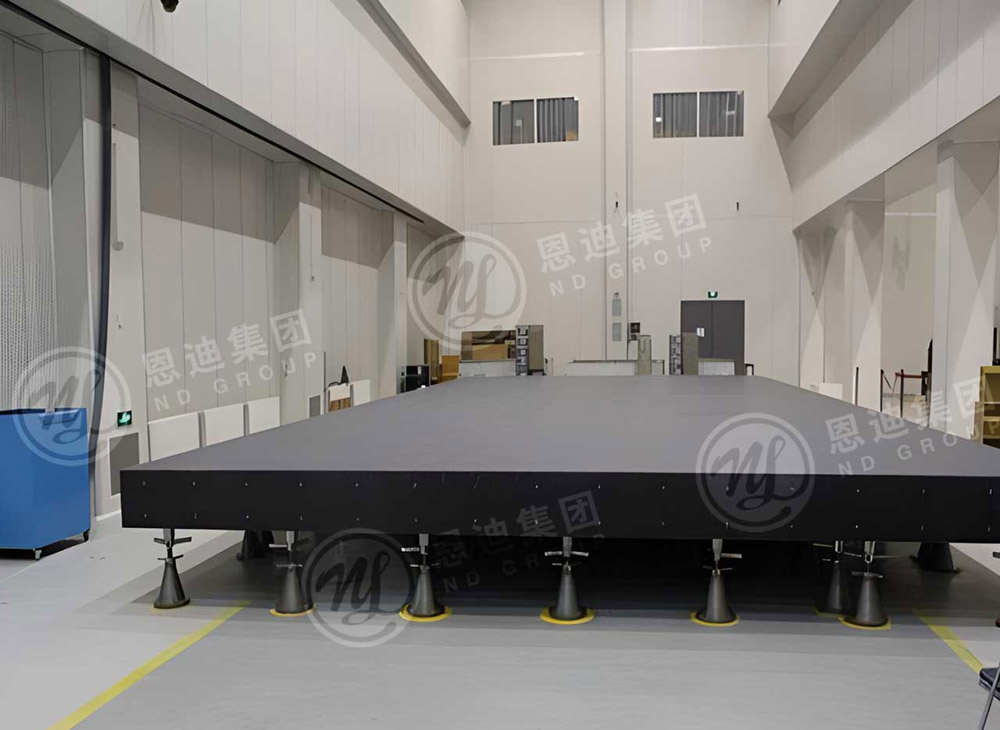
At the heart of this system is the planar thrust air bearing. An air pump pushes gas through a distribution box, which then shoots out from the air bearing to create a high-pressure cushion under the test spacecraft. By finely tuning the air pressure through restrictor holes, the system constantly counters the weight and payload of the object. This puts the bearing into a state of pure levitation, dropping friction and adhesion to virtually zero.
Because of this, the load can rotate freely and glide across the granite platform seamlessly. The residual friction (drag) is phenomenally low—often under 0.2 Newtons—yielding ultra-high precision.
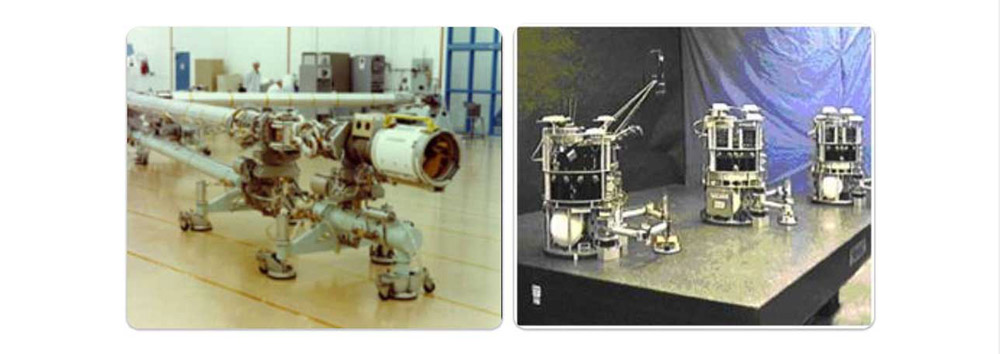
This technology powers some of the most famous space robotic test beds worldwide. Examples include the ground systems for Canada's SRMS (Canadarm) and SSRMS (Canadarm2), Japan's JEMRMS, Stanford University's dual-arm free-flying space robot, and the European Space Agency's ERA (European Robotic Arm). In China, leading institutions like Northwestern Polytechnical University, Huazhong University of Science and Technology, Harbin Institute of Technology (HIT), and the 5th and 8th Academies of the China Aerospace Science and Technology Corporation (CASC) have all built their own planar air-bearing test facilities. For instance, the multiple spacecraft ground simulation systems developed by HIT for the Space Technology Academy heavily rely on this exact method.
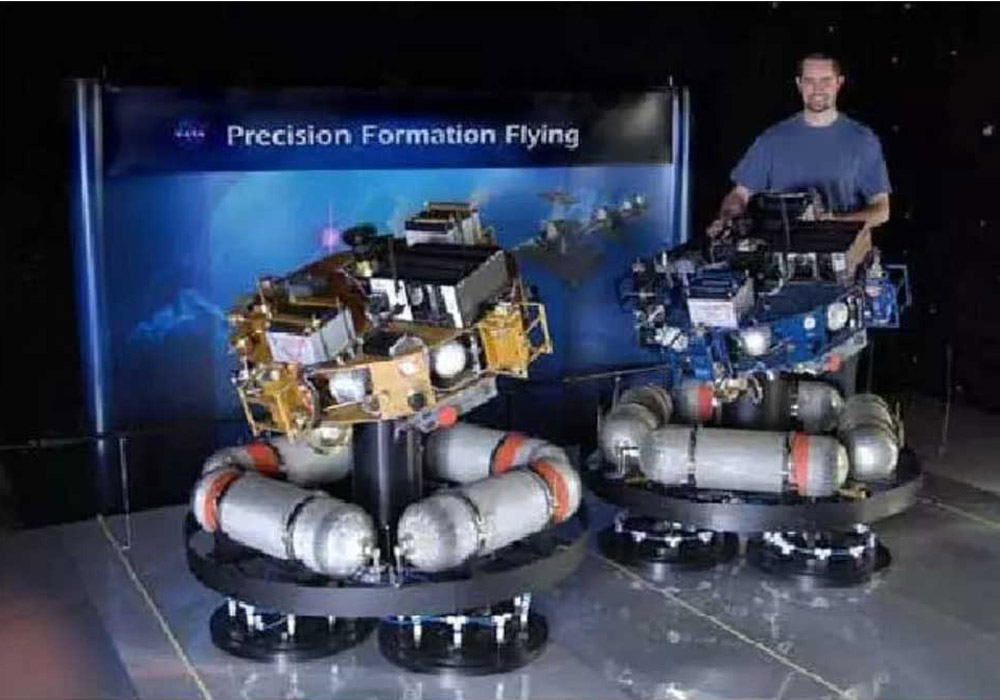
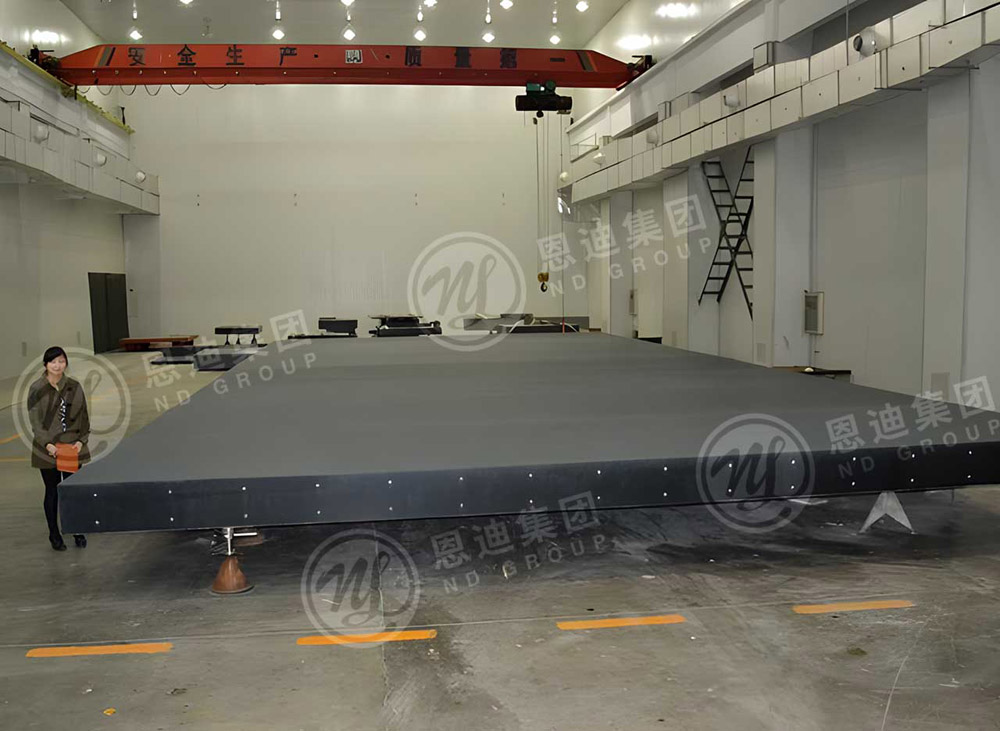
Why is the air-bearing system so popular? Its biggest advantages are how cleanly it compensates for gravity, its short construction cycle, and its low cost. The technology is highly mature, easy to maintain, exceptionally safe, robust, and reliable. Plus, unlike parabolic flights that only give you a few seconds of zero-G, an air-bearing table offers unlimited testing time and endless reusability.
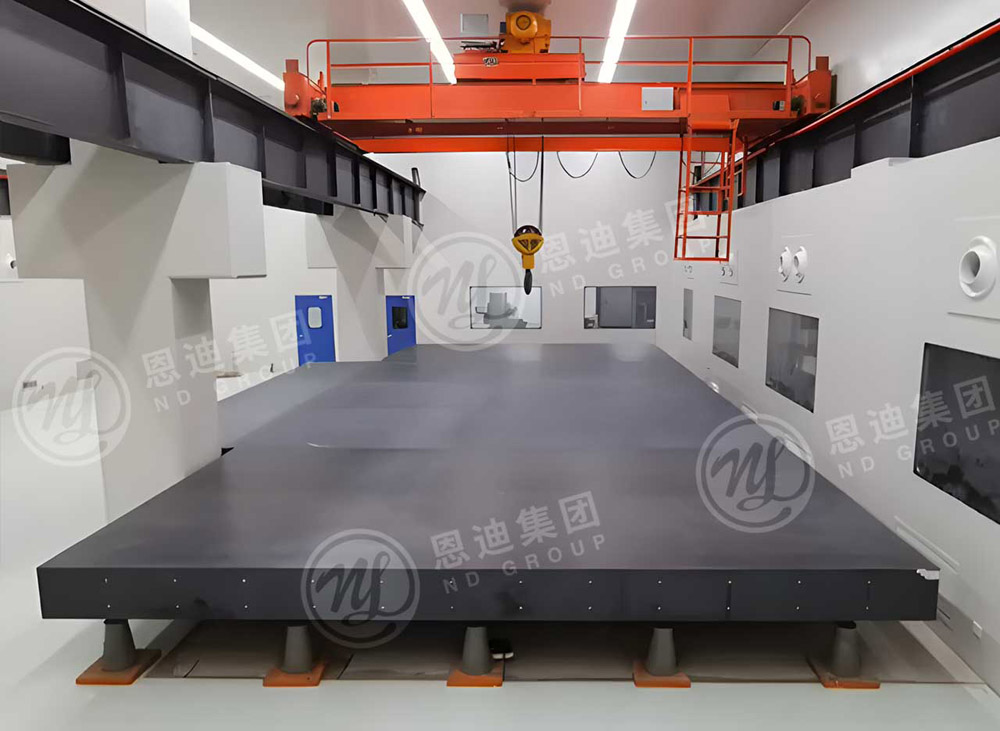
However, it does have a limitation: it primarily simulates microgravity in a 2D plane (providing two degrees of translational freedom and one degree of rotational freedom) or allows for spherical 3-axis attitude control experiments, rather than full 6D free-floating space.
Summary & Cool Applications
Currently, air-bearing and cable-suspension are the two most prevalent methods for simulating gravity. But because of the unique near-zero friction it offers, air-bearing technology isn't just used for space simulation—it is also a superpower in the fields of high-precision measurement and automated heavy assembly. Let's look at a few examples:
Example 1: Orbital Maneuvering
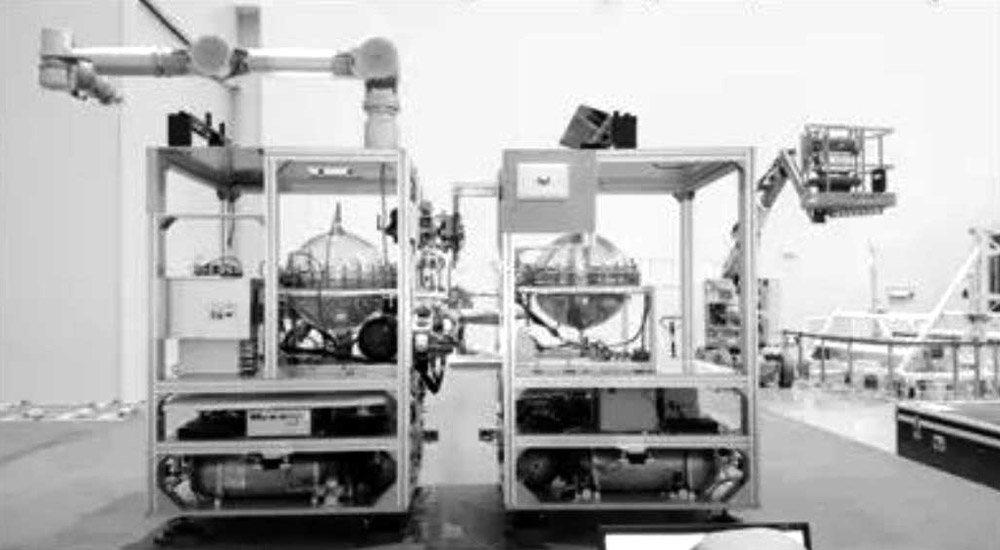
This is an on-orbit manipulation simulation system developed by the Aerospace Mechatronics Center at Harbin Institute of Technology (HIT). Both simulators float on air cushions to test complex space maneuvers like rendezvous and docking, on-orbit module replacement, and propellant refueling. Using this rig, HIT helped the 805th Institute of the Eighth Academy complete China's first-ever full-process ground test for on-orbit servicing.
Example 2: Heavy-Duty Assembly
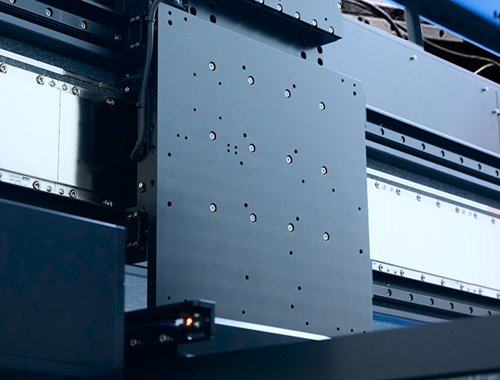
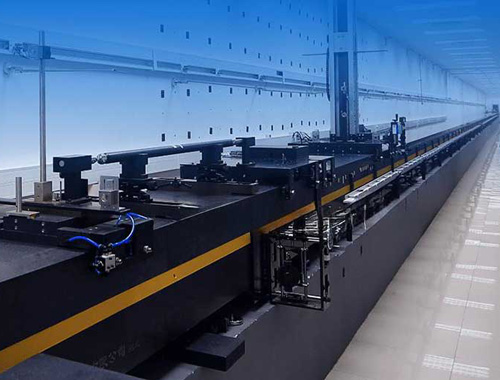
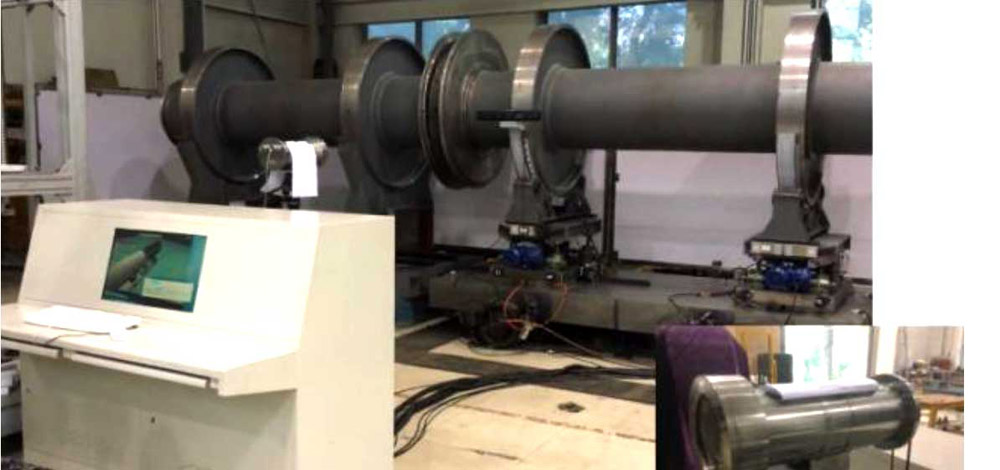
Take a look at this massive machine. It’s not simulating zero-G; instead, it leverages the near-zero friction of air bearings to drastically reduce the driving force needed to move heavy equipment. This unlocks incredibly precise and flexible motion control. The two giant blocks you see on the left and right represent heavy equipment modules that need to be mated together. Developed by HIT, this represents China's first use of air-bearing technology to achieve the high-precision flexible docking and assembly of heavy industrial equipment.
Example 3: Ultra-Precision Sensor Calibration
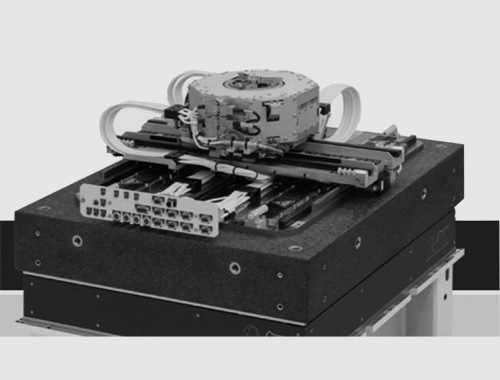
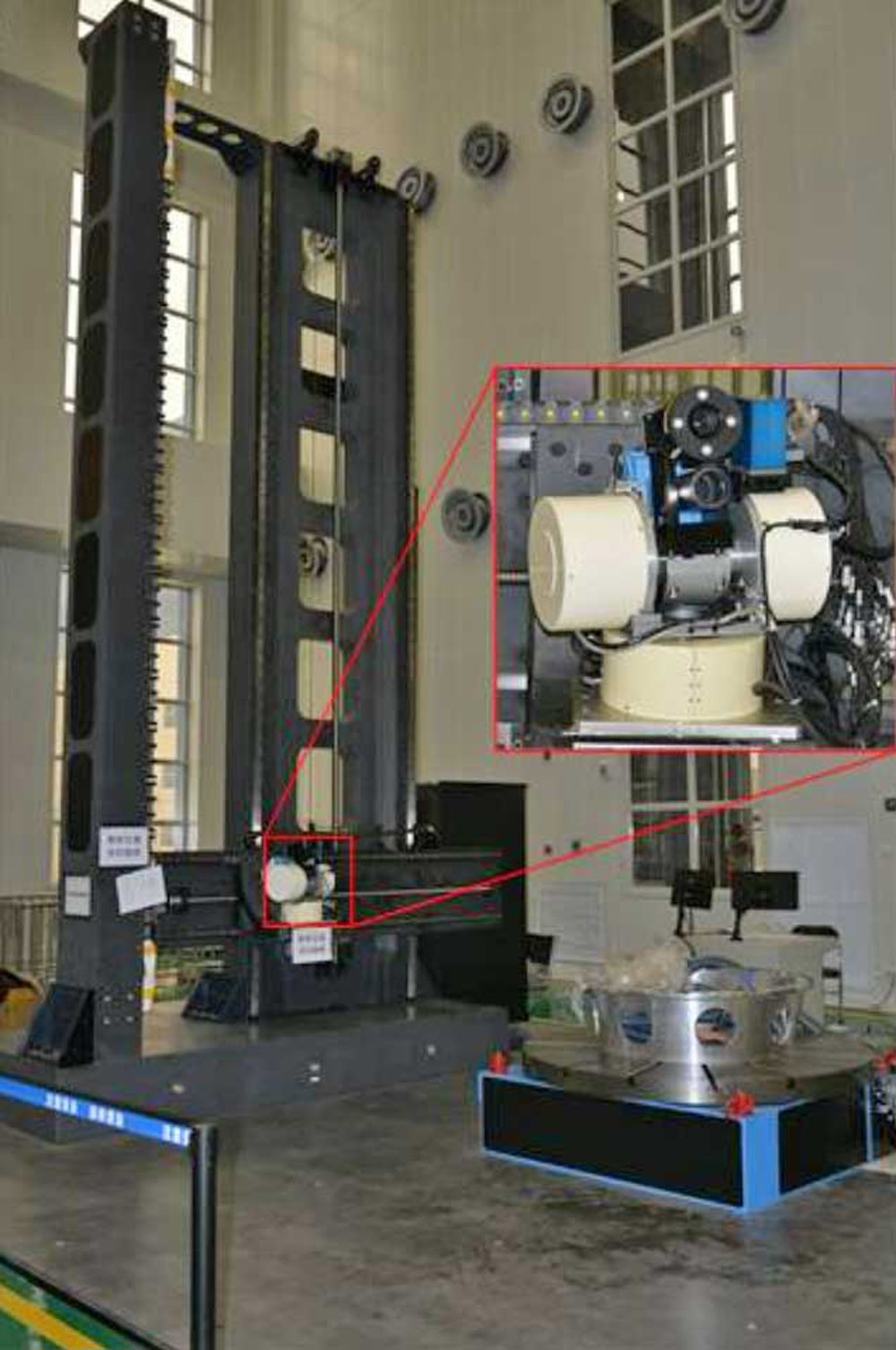
Don't let the bulky size of this machine fool you—it performs unbelievably delicate work. It boasts a spatial vector angle measurement accuracy of 3 arcseconds (3"), an absolute, certified world-class standard.
What does it do? Spacecraft are packed with sensors like inertial navigation systems and star trackers. You can't just bolt these on randomly; their alignment demands ruthless precision. Inevitable installation errors can mess up the spacecraft's flight control or Earth observation tasks.
This machine exists to calibrate those tiny installation errors. The coordinate system of each sensor is represented by an optical cube. Using visual aids and an autocollimator, the equipment measures the normal vectors of the sensor's three orthogonal planes, locking in its exact spatial coordinates. Just like the microgravity beds, its main structure is carved from solid natural granite.
For a deeper dive into space microgravity simulation, you can check out the following papers:
[1] Qi Naiming, Sun Kang, Wang Yaobing, et al. Spacecraft Microgravity Simulation and Testing Technologies [J]. Journal of Astronautics, 2020, 41(06): 770-779.
[2] Qi Naiming, Zhang Wenhui, Gao Jiuzhou, et al. A Review of Ground Simulation Test Methods for Space Microgravity Environments [J]. Aerospace Control, 2011, 29(03): 95-100. DOI:10.16804/j.cnki.issn1006-3242.2011.03.019.