Back in 1881, the American physicist A.A. Michelson was on a mission to measure the speed of light. To achieve this, he ingeniously designed a brilliant measurement device based on the principle of splitting a light wave's amplitude to create two interfering beams. Later, Michelson teamed up with Edward Morley to conduct the famous "aether drift" experiment using this very setup—a monumental milestone that fundamentally paved the way for the modern theory of relativity.
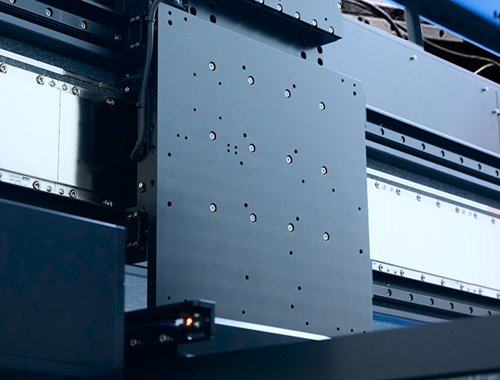
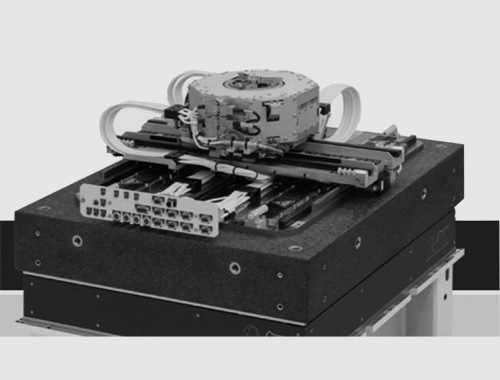
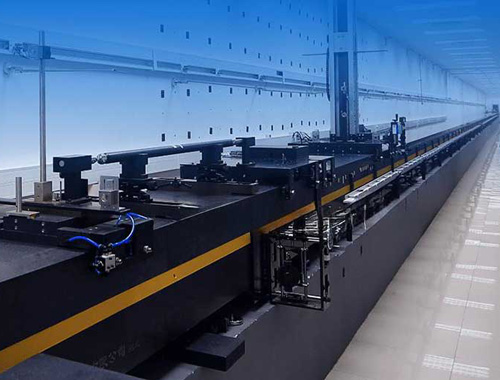
Elegantly designed and incredibly versatile, the Michelson interferometer became the foundational blueprint from which many modern interferometers used in cutting-edge science are derived. However, as optical science has advanced, so too has the engineering required to support it. Today, to eliminate environmental vibrations and ensure absolute thermal stability, these highly sensitive optical paths are frequently mounted on massive, ultra-flat granite components. Furthermore, the manual adjustments of the past have been upgraded with sophisticated motion control systems. These modern actuators allow for the sub-nanometer positioning of mirrors, transforming a classic physics apparatus into a state-of-the-art, automated metrology tool.
The goal of this guide is to help you understand the principles, structure, and tuning methods of the Michelson interferometer. By leveraging the stability of granite componets and the precision of modern motion control, we will observe non-localized interference fringes and accurately measure the wavelength of a helium-neon (He-Ne) laser. Along the way, we will deepen our understanding of fundamental optical concepts, including fringe visibility and temporal coherence, experiencing firsthand how 19th-century theory seamlessly integrates with 21st-century engineering.