
To ensure this minuscule force was applied "accurately" and "perfectly," the research and development team at the Tianjin Institute of Spacecraft Equipment spent seven grueling years overcoming massive engineering hurdles. Starting from scratch to build the testing platform, they pushed the boundaries through continuous technological, manufacturing, algorithmic, and testing innovations. Their dedication ultimately guaranteed the mission's success, bringing lunar soil safely back to Earth.
Zero Margin for Error: Precision Down to the Fraction
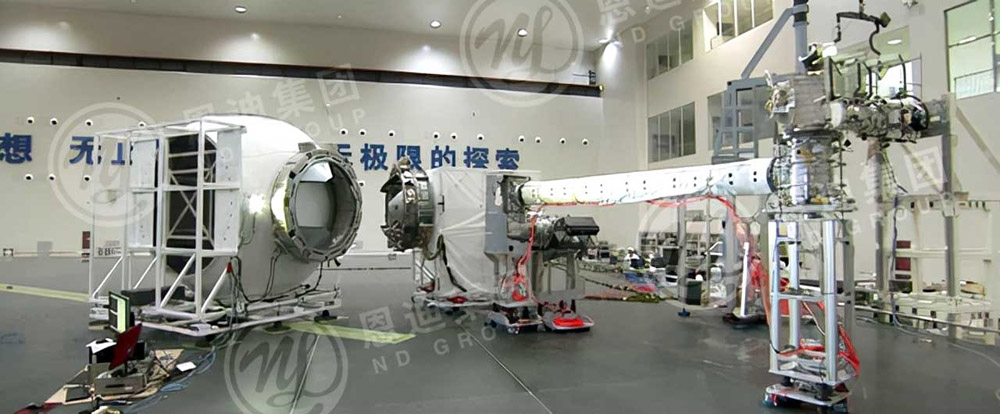
"While China had already mastered Earth-orbit rendezvous and docking, doing it in a lunar orbit 380,000 kilometers away is a completely different beast," explained a technician from the Institute. "Out there, you can't rely on navigation satellites. The spacecraft must complete the docking entirely autonomously. This required major breakthroughs in lunar orbit tracking precision, sensor interaction, and the docking of lightweight spacecraft. To physically verify this 'precise connection and seamless transfer' on the ground, we had to conduct full-physical simulation tests. And that's exactly what we did inside the Tianjin Key Laboratory of Micro/Low Gravity Environment Simulation Technology."
Inside this laboratory, the sensors and actuators used for the ground docking tests are the actual flight hardware. To accurately simulate their behavior in the vacuum of space, engineers use the thrust generated by gas jets to alter the orbit and attitude of the multi-ton simulator. Though the thrust is merely a few Newtons, a miss is as good as a mile. The researchers simply could not afford a single millimeter of error.
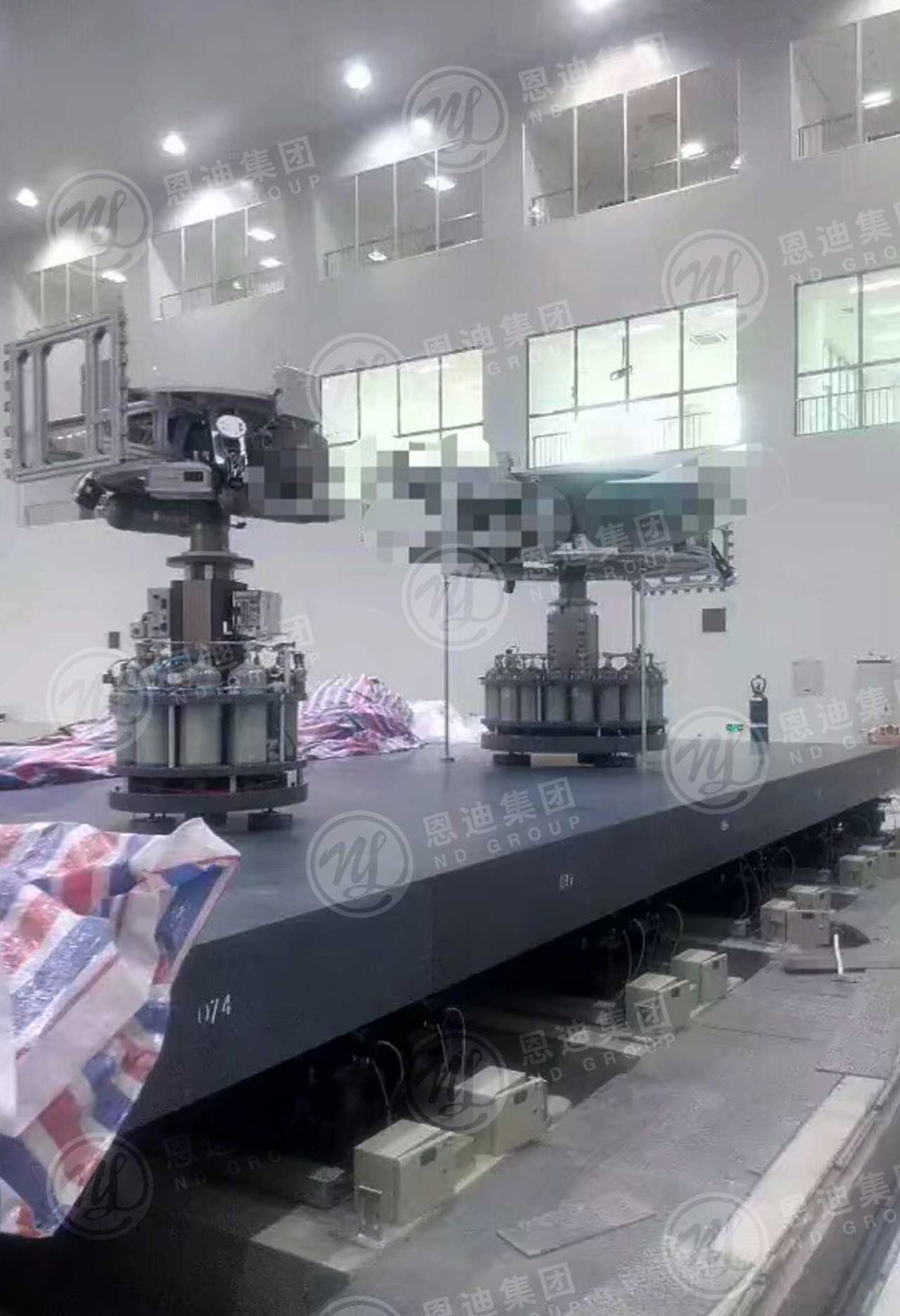
To conquer this, the Tianjin Institute of Spacecraft Equipment custom-built a colossal, ultra-flat support platform covering a staggering 1,200 square meters. The levelness of each individual block is within a mere 2 arcseconds, and the height difference at the seams is practically microscopic—just 10 microns. ND GROUP can offer customized solutions for clients: ultra-large air-bearing microgravity simulation platforms, guaranteeing a flatness of ≤5µm for any given square meter.
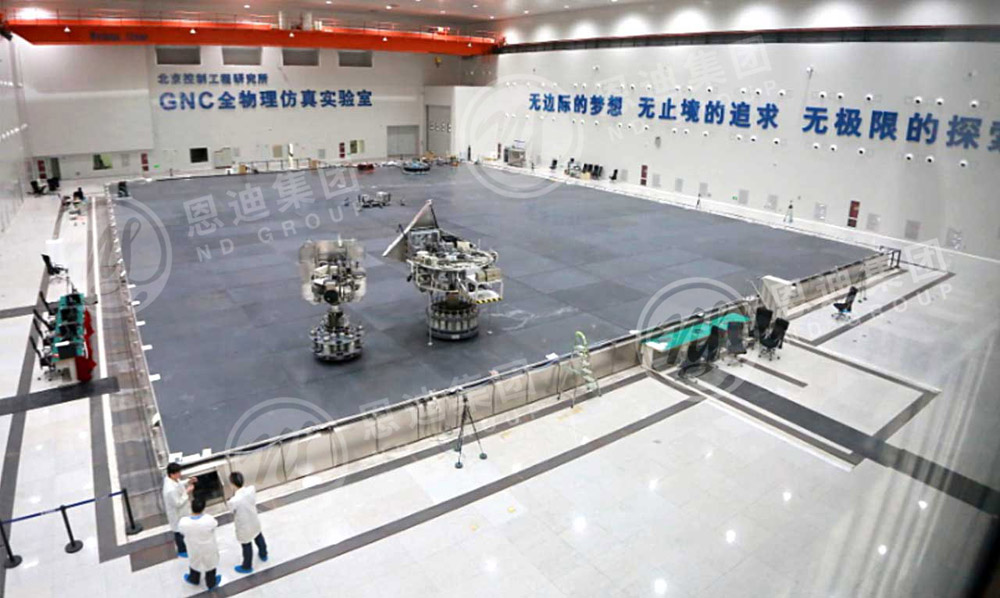
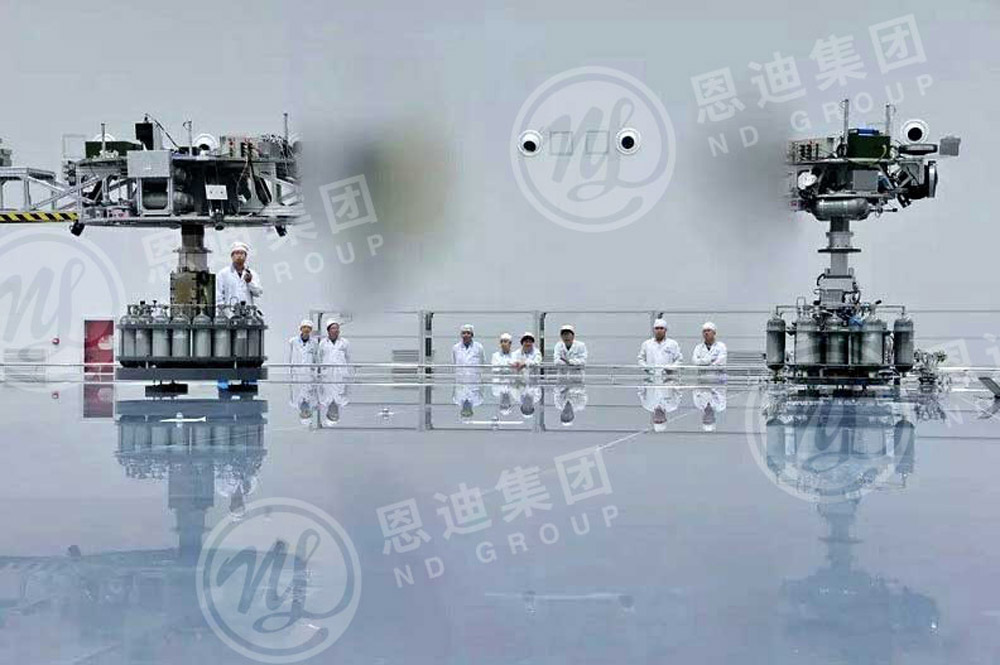
As the researchers noted, only with this extreme level of precision could the Chang'e 5 simulator glide across the platform with near-zero friction, perfectly validating the guidance, navigation, and control (GNC) technologies required for the delicate docking process.
Conquering Challenges, Starting from the Bedrock
Achieving this unprecedented precision required the team to overcome hurdles at every level—from the bedrock and support mechanisms to the platform body, control system, and leveling system. To adapt to Tianjin's specific geological conditions, the engineering had to start deep underground.
"We used friction piles and high-grade concrete pouring to provide a rock-solid foundation for this massive platform. To ensure a tight, highly rigid connection between the facility's foundation and the support adjustment mechanisms, we even embedded high-precision granite bearing pads directly into the foundation," a technician detailed.
The support adjustment mechanisms bridging the foundation and the platform are proprietary technologies developed by the Institute. Six sets of these mechanisms sit beneath each platform block—some bear the sheer weight, some tweak the platform's posture, while others reinforce structural rigidity. A total of 1,200 support columns work in unison, ensuring that the simulator smoothly crosses the seams even under the most dangerous and demanding test conditions.
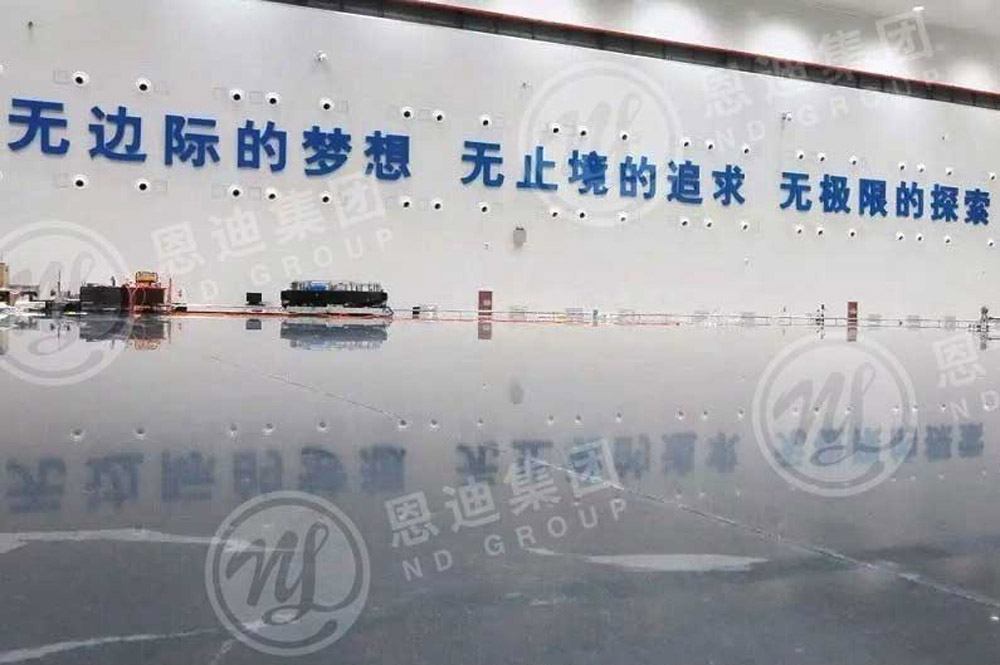
Choosing the right material for this massive, ultra-flat surface was another critical puzzle. Initially, engineers considered cast iron. However, iron is a maintenance nightmare—touching it, rusting, and rust removal would all severely compromise the platform's absolute flatness. After extensive research, the team turned their attention to granite sourced from Jinan. Boasting high compressive strength and excellent corrosion resistance, it was the ideal candidate. Ultimately, 200 specially quarried blocks of natural "Jinan Black" granite were used to construct the platform.
Cutting-Edge Technologies Powering the Tests
Getting the 200 granite blocks delivered was one thing; perfectly aligning them was another. To adjust the levelness and seam heights to meet the strict test parameters, researchers developed an autonomous cruising inspection vehicle.
This smart robot navigates the entire platform, precisely measuring and automatically leveling the blocks. What used to take one to two months of tedious manual adjustment is now completed in just 24 hours, dramatically boosting efficiency and the platform's operational readiness.
The large ultra-flat support platform
"The large ultra-flat support platform is the foundational infrastructure for air-bearing microgravity testing," a project leader at the Institute revealed. "Beyond the Chang'e 5 mission, it has already hosted over a dozen major tests, including those for China's Space Station and large deployable space mechanisms. Moving forward, it will serve as a robust testing ground for manned lunar landings, space formation flying, and deep space exploration."
He proudly noted that the successful development of this platform marks the end of the manual-tuning era in China, catapulting the nation's physical simulation capabilities for air-bearing platforms to a world-leading level. The Institute plans to continuously iterate and develop large-scale ultra-flat support technology and low/micro-gravity simulation technology to provide premium services to more clients.
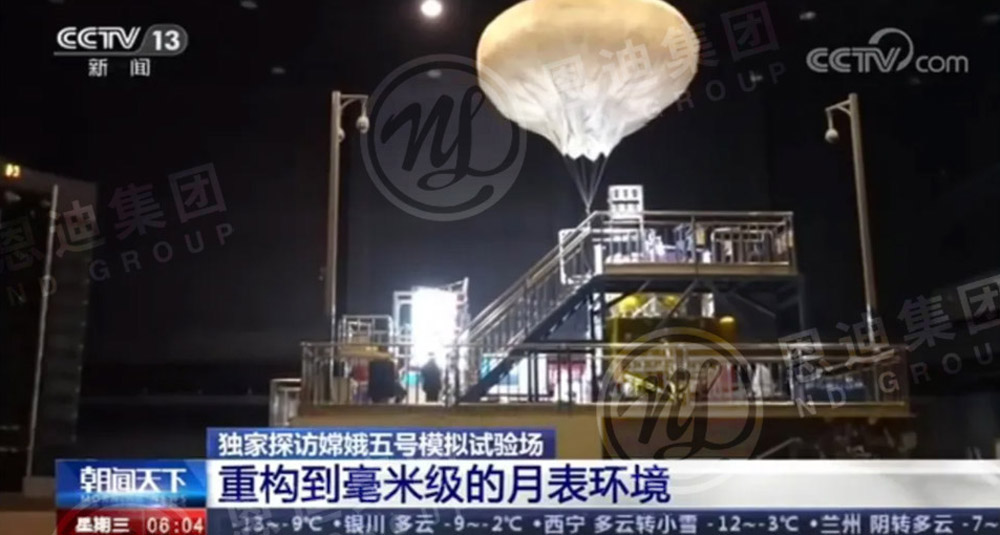
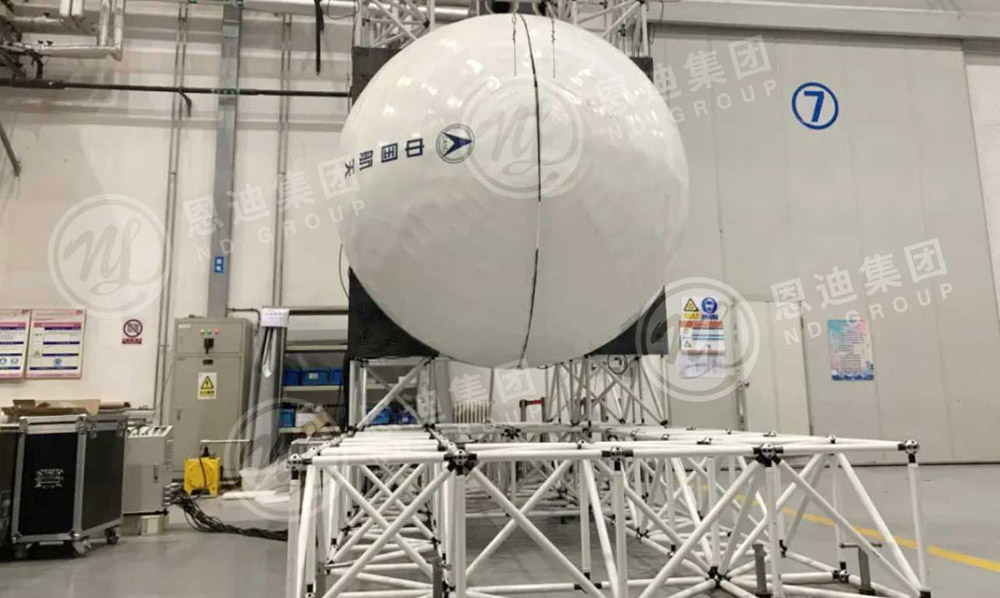
But that's not all. Another ingenious product from the Institute recently caught the eyes of millions of TV viewers across the country. During a recent CCTV broadcast from the Chang'e 5 simulation facility, an eye-catching, glowing "Baozi (steamed bun) balloon" was seen suspended in mid-air. This quirky device is actually the 1/6g lunar gravity pneumatic suspension compensation device, engineered specifically for the lunar surface sampling robotic arm.
This system simulates the moon's gravity (which is 1/6th of Earth's), providing a highly realistic environment for ground testing the robotic arm. It validates the entire mission sequence: from digging and collecting samples under lunar gravity, to transferring the primary container, and finally placing it into the sealed return capsule. Not only does this inverted "Baozi" balloon perfectly meet the rigorous environmental requirements of the test site, but its shape also adds a charming touch of local Tianjin flavor to the high-tech lab.
Beyond the testing facilities, the Institute's fingerprints are all over the spacecraft itself. According to the project leader, for the Chang'e 5 mission, the Institute manufactured numerous critical onboard components. These included the solar array mechanisms for both the ascender and lander, the directional antenna Hold-Down and Release Mechanism (HDRM), the sampling robotic arm HDRM, and the sample container connection and unlock device. Furthermore, they successfully built the simulated lunar surface topography system for the sampling area, and handled vital tasks such as thermal control implementation, assembly, and comprehensive ground support—ensuring an airtight guarantee for the flawless execution of the Chang'e 5 lunar mission.